Follow BUSRide on Facebook Follow BUSRide on Twitter Watch BUSRide on YouTube
Maintenance

Front tire failures— the rest of the story

A front tire failure can cause the motorcoach to be either extremely difficult to control or uncontrollable entirely. There is always the possibility of a catastrophic accident. A careful examination of the variables and practices that affect the control of a motorcoach can reduce the incidence of front tire failures.

PrintFriendlyFacebookLinkedInPlaxo PulseTwitterNewsVineShare

Clean is just good business

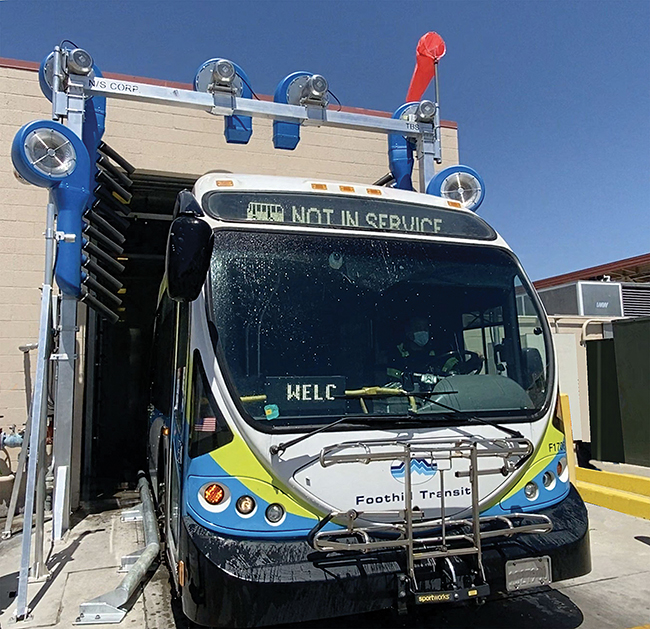
Going clean is the easiest and most cost effective way to attract and retain the best customers. A washed vehicle encourages drivers to drive safely and maintain the vehicle. Technicians are prone to take more time under a clean vehicle to perform the necessary preventative maintenance. Regular washing with an effective system extends the life of the bus and helps hold its value.

PrintFriendlyFacebookLinkedInPlaxo PulseTwitterNewsVineShare

Get your kit together and protect that parking brake from freezing

I recently came across a solution specifically related to preventing the parking brake from freezing — a device anyone can make in the garage.

PrintFriendlyFacebookLinkedInPlaxo PulseTwitterNewsVineShare

Retrofitted seat belts could come at a price

Last year it became clear that the government would issue a seatbelt mandate for new motorcoaches. This would not come as a complete surprise to the industry given recent high profile fatal accidents involving ejections, and especially the motorcoach-specific crash testing NHTSA has conducted on the effectiveness of passenger restraints.

PrintFriendlyFacebookLinkedInPlaxo PulseTwitterNewsVineShare

Chase down that cracked air filter indicator

For about a week I had been hearing a high-pitched whistling noise coming from an S-60 engine. I inspected it and drove it personally, but was still unable to locate the source. With a little more probing, I eventually diagnosed the disturbing noise as coming from the air intake system on the engine.

PrintFriendlyFacebookLinkedInPlaxo PulseTwitterNewsVineShare

DPF regen in a slow moving bus requires TLC

The emission standards that went into effect in 2007 have created further issues in an industry that has one of the lowest pollution emissions per passenger in the entire transportation industry. Nonetheless they are here to stay.

PrintFriendlyFacebookLinkedInPlaxo PulseTwitterNewsVineShare

Go Clean: Bus washing is a best practices basic

The easiest, fastest and least expensive measure bus and motorcoach operators can take to make a lasting impression is to keep the vehicles washed and shining. How clean is clean? A question both private and public operators are asking to promote a more positive public image and a more inviting option to upscale riders.

The extra care given to the exterior surfaces of transit buses has become a greater concern with the advent of sophisticated bus-wrap advertising, and with transit buses sporting a more polished upscale appearance. A bus wash system represents a significant capital investment from initial planning to installation.

PrintFriendlyFacebookLinkedInPlaxo PulseTwitterNewsVineShare

New lifts give maintenance a leg up

Introduced at APTA Expo 2008, the Rotary Mach 4 is the company’s most recent iteration of its mobile column lift. Rotary sales manager Roger Perlstein says this product sets up fast and raises a vehicle 70 inches in 78 seconds. The company claims this is quicker than comparable lifts.

PrintFriendlyFacebookLinkedInPlaxo PulseTwitterNewsVineShare

Work less, save more

With a reputation for its design and production of fully automatic transmissions for a wide variety of vocational applications, Allison Transmission, Inc., Indianapolis, IN, is dedicated as well to helping its customers operate as efficiently as possible, particularly in a down economy.

PrintFriendlyFacebookLinkedInPlaxo PulseTwitterNewsVineShare

Preparing for extreme cold weather operations

On January 16 the ambient temperature in Chicago reached minus 24 F with the associated wind chill in excess of minus 40 F. On that day, the North Pole registered minus 8 F. The temperature was so extreme that no matter how anyone dressed, the average person could only stay outside for about 15 minutes.

PrintFriendlyFacebookLinkedInPlaxo PulseTwitterNewsVineShare
©2013 BUSRide Magazine. All Rights Reserved. Content on this website is copyrighted and may not be reproduced in while or in part without the express written consent of the publisher.